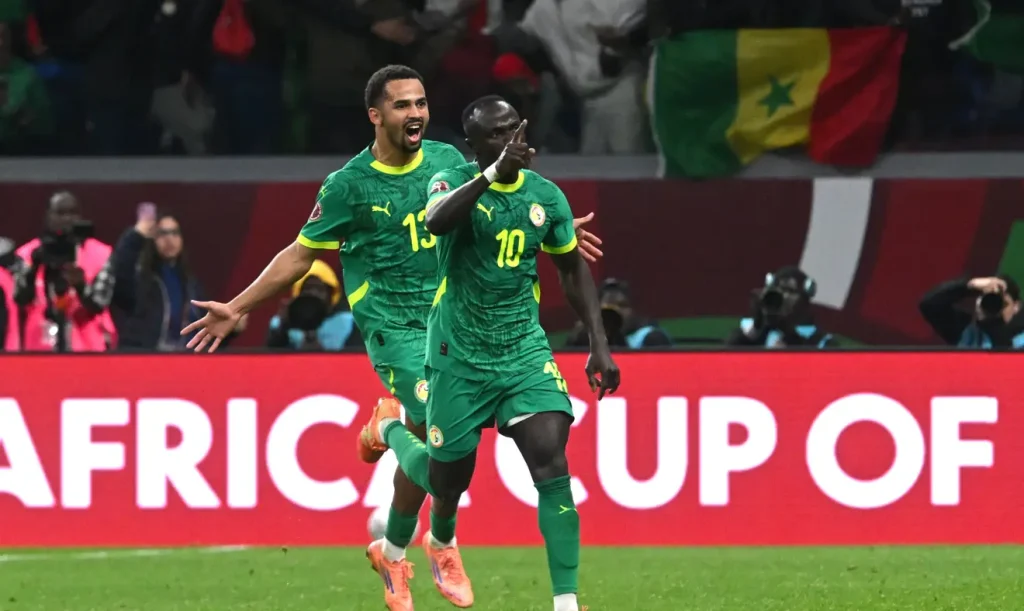
The AFCON 2025 goal record has officially rewritten African football history after the tournament reached an unprecedented 120 goals, with matches still remaining before the final whistle in Morocco. This historic scoring surge has turned the TotalEnergies CAF Africa Cup of Nations into the most prolific edition the competition has ever witnessed.
From the opening fixtures, AFCON 2025 signaled a shift in tempo and ambition. Teams approached games with attacking intent, coaches embraced expansive tactics, and players delivered performances that blended flair with efficiency. As a result, the tournament quickly surpassed expectations and long-standing records.
The previous benchmark of 119 goals, set during the 2023 edition in Côte d’Ivoire, fell before the competition reached its climax. With the final and third-place playoff still to be played, the AFCON 2025 goal record may yet climb higher, further underlining the tournament’s historic nature.
The numbers reflect a broader transformation within African football. Powerhouses such as Senegal, Nigeria, Morocco, and Côte d’Ivoire displayed attacking depth and confidence, while emerging teams matched them stride for stride. Rather than cautious play, matches became open contests defined by pace, pressing, and technical sharpness.
Individual brilliance played a decisive role in driving the scoring explosion. Morocco’s Brahim Díaz emerged as the tournament’s leading scorer with five goals, showcasing composure and creativity in the final third. Close behind are Egypt’s Mohamed Salah and Nigeria’s Victor Osimhen, each with four goals and still in contention to claim the Golden Boot.
Tactically, AFCON 2025 has been a showcase of evolution. Coaches favored high defensive lines, quick transitions, and fluid attacking systems. Forwards thrived in space, midfielders broke lines with confidence, and defenders contributed to build-up play rather than sitting deep. Even in knockout matches, pressure did not suppress creativity, allowing the goal count to keep rising.
The expansion to 24 teams, once criticized, has proven its value in Morocco. Instead of diluting quality, it has revealed the continent’s growing depth. Competitive balance improved, and fans were treated to thrilling comebacks, late winners, and end-to-end encounters that sustained excitement from the group stage through to the semifinals.
Beyond tactics and talent, atmosphere played its part. Packed stadiums across Morocco, from Tangier to Rabat, amplified the spectacle. Supporters created an electric backdrop that fueled momentum and turned goals into shared moments of celebration, reinforcing AFCON’s status as one of the world’s most vibrant football tournaments.
More than a statistic, the AFCON 2025 goal record signals a defining moment for African football. It reflects improved youth development, global exposure of players, and a growing belief that attacking football can succeed at the highest continental level. As the tournament reaches its conclusion, AFCON 2025 has already secured its legacy as a bold statement about the present strength and future promise of the African game.