The Africa Cup of Nations final descended into historic chaos on Sunday. Senegal defeated Morocco 1-0, but the match will be remembered for its disorder. The climax featured a player walk-off, fan violence, and a controversial penalty miss. Consequently, the spectacle displayed both the passion and the problems within African soccer. The tension erupted in the closing minutes of regular time. Senegal had a late goal disallowed for a soft foul. Moments later, the referee awarded Morocco a penalty after a VAR review. This sequence triggered a chain reaction of protests and fury.
Senegal’s coach, Pape Thiaw, ordered his players to leave the pitch in protest. Some players retreated to the locker room, while others remained. Simultaneously, a section of Senegalese fans clashed with stewards and police. Security forces barely prevented a pitch invasion. Star forward Sadio Mané eventually persuaded his teammates to return. The delay lasted 14 minutes, utterly disrupting the match’s flow. This AFCON final will be analyzed for years as a landmark moment of institutional mistrust and raw emotion spilling over.
The Penalty Incident That Ignited the Fire
The flashpoint began with a disallowed Senegal goal in added time. Ismaïla Sarr put the ball in the net, but referee Jean-Jacques Ndala ruled it out. He cited a foul by Abdoulaye Seck on Achraf Hakimi in the buildup. The decision appeared marginal, incensing the Senegalese bench. Then, another VAR intervention followed. Ndala reviewed a challenge by El Hadji Malick Diouf on Brahim Díaz. He ultimately awarded Morocco a penalty. This decision, perceived as soft and coming so soon after the disallowed goal, proved incendiary.
Senegal’s players and staff swarmed the field in furious protest. They physically prevented the penalty from being taken. Coach Thiaw then made the drastic decision to order his team off. This act of protest is exceptionally rare in a major final. It reflected a deep-seated anger that transcended the immediate call. The walk-off was a dramatic manifestation of long-simmering tensions. Many across Africa believed Morocco received favorable treatment throughout the tournament. This penalty decision became the catalyst for that belief to explode into public view.
Díaz’s Costly Panenka and the Eventual Winner
When play finally resumed, Brahim Díaz faced immense pressure. The Moroccan forward had to take the penalty amid relentless taunting. He opted for a chipped “Panenka” style shot. His attempt was tragically weak and floated directly into the arms of goalkeeper Édouard Mendy. The miss was a catastrophic error in judgment. Díaz was immediately substituted and wept openly on the bench. He later apologized on social media, stating his “soul hurts.” His miss cost Morocco a likely victory in regulation time.
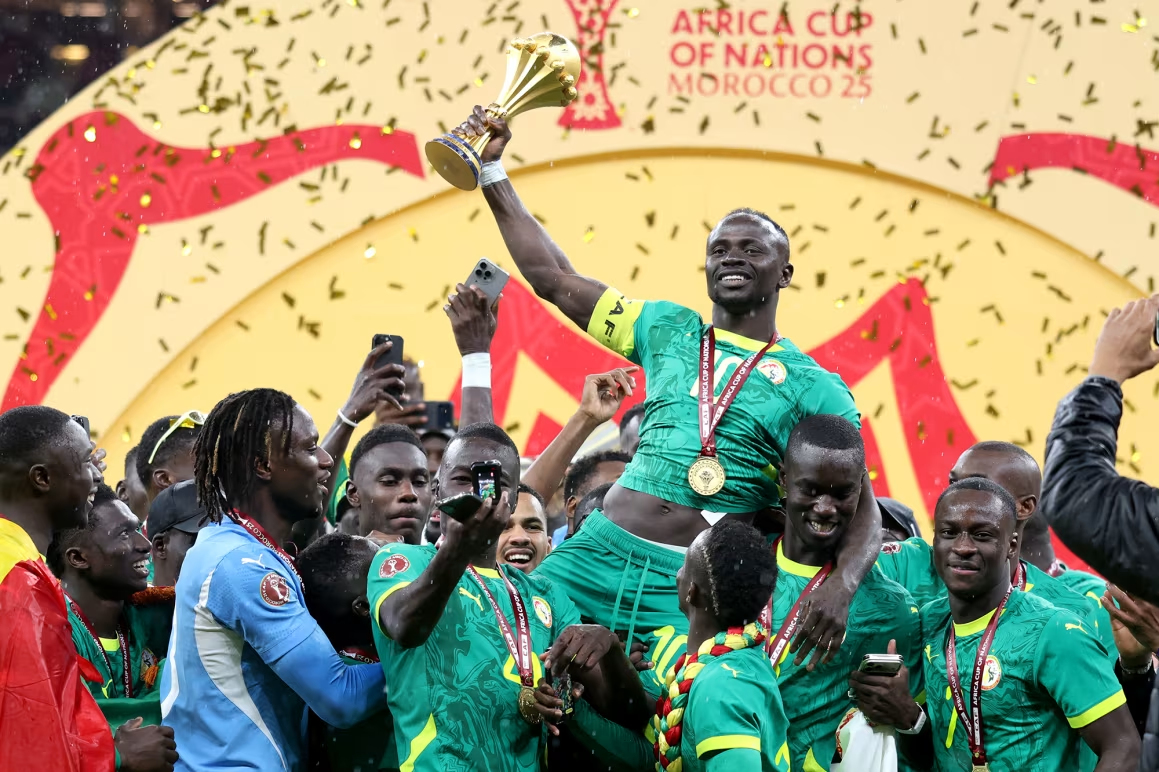
The match proceeded to extra time, still simmering with tension. Senegal’s Pape Gueye then scored a stunning winner. He later credited Mané for rallying the team back onto the field. However, the headlines were already written. The chaotic scenes overshadowed the quality of the winning goal. The post-match period featured further incidents, including scuffles in the press box. The AFCON final had transformed from a sporting contest into a sprawling controversy. The trophy ceremony felt like an afterthought to the earlier bedlam.
Deep-Rooted Mistrust and Historical Context
The chaos cannot be understood in isolation. A backdrop of institutional mistrust fueled the reactions. Many African soccer observers perceived a pro-Morocco bias throughout the tournament. Several earlier refereeing decisions had benefited the host nation. Furthermore, Senegal’s FA had lodged a formal complaint before the final. It cited poor security and logistical treatment upon arrival. This created a siege mentality within the squad.
African soccer journalist Ali Howorth explained the wider sentiment. He noted that millions across the continent supported Senegal as a stand against the “system.” Coach Thiaw’s walk-off was seen by some as an act of courage, not petulance. It represented a pushback against perceived institutional unfairness. This context explains why the reaction was so vehement. The AFCON final became a pressure valve for frustrations extending far beyond a single penalty call. The event exposed the fragile relationship between CAF, its member associations, and the teams.
Immediate Fallout and Official Condemnation
The fallout from the chaotic final was swift. CAF issued a strong statement condemning the “unacceptable behavior.” It specifically cited incidents targeting match officials and organizers. The governing body promised to review all footage and take appropriate action. FIFA President Gianni Infantino was present at the match. He congratulated Senegal but also condemned the scenes. He stated that leaving the field is unacceptable and that violence cannot be tolerated. Infantino emphasized respect for match officials’ decisions.
The Moroccan FA announced it would explore legal action. It argued Senegal’s walk-off negatively affected the match’s outcome. Meanwhile, Coach Pape Thiaw may face significant punishment from CAF. He missed his post-match press conference due to ongoing media area clashes. His role in orchestrating the walk-off puts him in direct conflict with the authorities. These disciplinary proceedings will extend the controversy for weeks. They also set a precedent for how African soccer manages profound dissent on its biggest stage.
Lasting Implications for African Soccer
This AFCON final represents a pivotal moment for the sport in Africa. It highlights the dangerous consequences of eroded trust in governance. While the passion is undeniable, the eruption of chaos damages the continent’s soccer reputation. The incident may accelerate calls for structural reform within CAF. Improved transparency in refereeing appointments and VAR protocols is now essential. Furthermore, the event underscores the intense pressure on host nations. Morocco’s close ties with FIFA, as a 2030 World Cup co-host, ironically fueled suspicion.
For Senegal, the victory is bittersweet. Their second AFCON title is marred by controversy. The focus is on their protest, not their triumph. The team’s resilience is admirable, but the narrative is fixed on chaos. Ultimately, the final served as a stark warning. Soccer’s essence is competition within the laws of the game. When teams feel those laws are applied unjustly, the very foundation of sport is risked. Healing these divisions is the urgent task facing African soccer’s leaders.