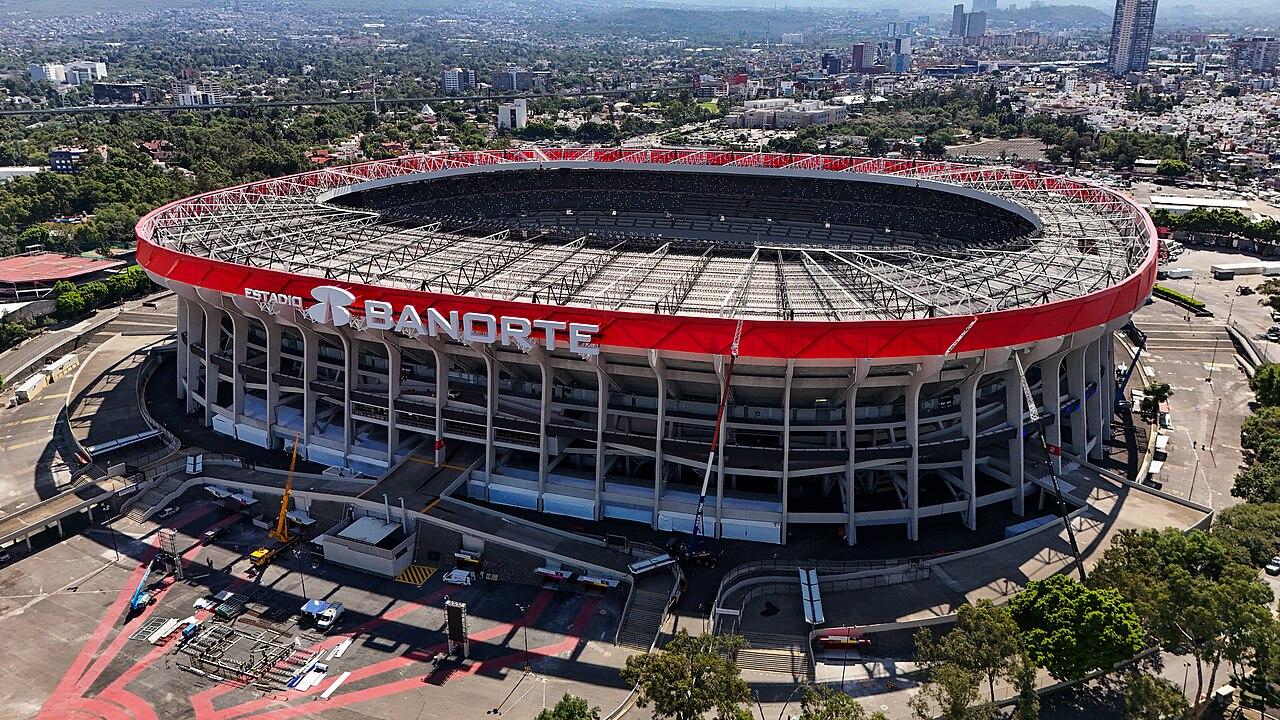
Estadio Azteca will be the most historic venue at the FIFA World Cup 2026, hosting the tournament’s opening match in Mexico City.
During the World Cup, the stadium will be officially branded as Estadio Ciudad de México because FIFA uses neutral venue names and avoids commercial or sponsor branding. But to football fans everywhere, this is Estadio Azteca: the home of Club América, the fortress of Mexico’s national team and one of the most famous stadiums in world sport.
Opened in 1966, Estadio Azteca has already hosted two FIFA World Cup finals. Brazil won the 1970 final here with Pelé, and Argentina won the 1986 final here with Diego Maradona. The same stadium also staged Maradona’s “Hand of God” goal and “Goal of the Century” against England.
In 2026, Estadio Azteca becomes even more important. It will become the first stadium in history to host matches at three men’s FIFA World Cups: 1970, 1986 and 2026. It will also host the World Cup opening match for a record third time.
Quick Facts About Estadio Azteca
| Fact | Detail |
|---|---|
| Stadium name | Estadio Azteca |
| FIFA World Cup name | Estadio Ciudad de México |
| Location | Mexico City, Mexico |
| Address | Calzada de Tlalpan 3465, Santa Úrsula Coapa, Coyoacán |
| Capacity | 87,523 |
| Opened | 1966 |
| Roof | Open-air |
| Surface | GrassMaster hybrid |
| Main tenants | Club América and Mexico national team |
| Competition focus | FIFA World Cup 2026 |
| World Cup matches | 5 matches |
| Biggest match | Opening match |
| First World Cup 2026 match | June 11, 2026 |
| Opening match | Mexico vs South Africa |
| Known for | Pelé, Maradona, altitude, Mexico fans and World Cup history |
Where Is Estadio Azteca?
Estadio Azteca is located in southern Mexico City, in the Santa Úrsula Coapa area of the Coyoacán borough.
The stadium sits on Calzada de Tlalpan, one of the city’s major roads. It is around 14 miles from Mexico City International Airport and is connected to the city’s public transport system through metro and light-rail links.
For visitors, the location is important because Mexico City is one of the largest and busiest urban areas in the world. Traffic can be heavy, especially on match days. Public transport is often the better option, although it can become crowded before and after major games.
The stadium is close to important attractions such as Coyoacán, Xochimilco, the UNAM campus and Six Flags Mexico. Fans who plan well can combine World Cup football with some of Mexico City’s strongest cultural experiences.
History of Estadio Azteca
Estadio Azteca opened on May 29, 1966, with a match between Club América and Torino.
The stadium was built as a national football monument. Mexico wanted a venue capable of hosting the World Cup, and the result was a steep concrete bowl that became one of the most recognisable stadiums in the world.
The name honours the Aztec civilization and the history of Tenochtitlán, the ancient city beneath modern Mexico City. From the beginning, the venue was designed to feel massive, intense and deeply connected to Mexican identity.
Estadio Azteca hosted the 1970 FIFA World Cup final, where Brazil beat Italy 4-1. That Brazil team is still regarded as one of the greatest in football history.
Sixteen years later, the stadium hosted the 1986 World Cup final, where Argentina beat West Germany 3-2. That same tournament included the Argentina vs England quarterfinal, where Maradona produced two of the most famous goals in the history of the game.
No World Cup 2026 stadium carries a deeper football legacy.
Construction and Design
Estadio Azteca was designed by Pedro Ramírez Vázquez and Rafael Mijares Alcérreca. Construction began in 1961 and took place on volcanic rock in southern Mexico City.
The design is a steep, football-first bowl. Unlike multi-use stadiums built for several sports, Estadio Azteca was created to bring fans close to the pitch and concentrate sound inside the venue.
That bowl shape is one reason the stadium has such a powerful atmosphere. When more than 80,000 fans are inside, the noise can feel like it presses down on the field.
The stadium is built from reinforced concrete and has survived major earthquakes in Mexico City, including the 1985 and 2017 earthquakes, with only limited damage. That durability has helped the venue remain central to Mexican sport for six decades.
The design may be old by modern stadium standards, but its sightlines, scale and atmosphere are still part of its power.
Estadio Azteca and World Cup 2026
Estadio Azteca will host five FIFA World Cup 2026 matches.
The biggest is the opening match on June 11, 2026, when co-hosts Mexico face South Africa. That fixture will begin the largest World Cup in history, a 48-team tournament staged across Mexico, the United States and Canada.
The stadium will also host additional group-stage matches and a knockout fixture in the Round of 32.
For FIFA, the venue is more than a stadium. It is a symbol. Estadio Azteca connects the modern expanded World Cup to two of the sport’s most iconic tournaments: Mexico 1970 and Mexico 1986.
No other venue in the 2026 tournament can match that historical weight.
World Cup 2026 Matches at Estadio Azteca
| Date | Match |
| June 11, 2026 | Mexico vs South Africa |
| June 17, 2026 | Group-stage match |
| June 24, 2026 | Group-stage match |
| June 30, 2026 | Group-stage match |
| July 5, 2026 | Round of 32 |
The opening match will be the headline. Mexico vs South Africa gives the tournament a powerful start, with the host nation playing in front of a massive home crowd.
For African fans, this match has special importance because South Africa will be part of the first game of the tournament. Bafana Bafana will walk into one of football’s most famous stadiums, at altitude, against a home team backed by more than 80,000 supporters.
The Round of 32 fixture also gives Estadio Azteca a knockout-stage role, keeping the stadium relevant beyond the opening week.
Why Estadio Azteca Was Chosen for the Opening Match
Estadio Azteca was chosen for the World Cup 2026 opening match because no other venue carries the same football history.
It hosted the 1970 World Cup final. It hosted the 1986 World Cup final. It witnessed Pelé’s last World Cup triumph and Maradona’s most famous World Cup moments. It has also been the spiritual home of Mexican football for decades.
The opening match needed a venue that could represent football heritage, host-nation passion and global symbolism. Estadio Azteca does all three.
Mexico is also one of the three host nations for the 2026 tournament, and giving the first match to Mexico City recognises the country’s deep World Cup history. Mexico previously hosted the tournament in 1970 and 1986, and in 2026 it becomes part of the first three-nation World Cup.
The opening match will not just start a tournament. It will connect three generations of World Cup history.
Altitude: The Mexico City Factor
Estadio Azteca sits about 7,200 feet, or 2,200 metres, above sea level.
That altitude is one of the stadium’s defining features. The thinner air can affect stamina, breathing, sprint recovery and ball movement. Players who are not used to altitude may tire faster, especially if they arrive late or fail to acclimatise.
The ball can also travel differently in thinner air. Long passes, shots and crosses may carry farther than expected, while players may need time to adjust their timing.
For Mexico, altitude has long been part of the home advantage. Visiting teams often describe Estadio Azteca as one of the most difficult away venues in international football.
For South Africa and other teams playing there in 2026, preparation will matter. Arriving early could be a major advantage.
Renovations for World Cup 2026
Estadio Azteca underwent major renovation work before the 2026 World Cup.
The upgrades included a hybrid GrassMaster pitch, new video screens, LED lighting, refurbished areas, improved locker rooms, replaced seating and modernised player facilities.
The renovation was necessary because the stadium is 60 years old in 2026. FIFA World Cup venues must meet strict standards for players, fans, media, security, hospitality and broadcast operations.
The goal was not to erase the stadium’s identity. It was to modernise the building while preserving the bowl, atmosphere and historical character that make Estadio Azteca unique.
The stadium reopened in March 2026 with a Mexico vs Portugal friendly. Reports around the reopening noted that some details were still being completed, making final preparations important before the tournament begins.
GrassMaster Hybrid Pitch
Estadio Azteca will use a GrassMaster hybrid surface for World Cup 2026.
A hybrid pitch combines natural grass with synthetic reinforcement fibres. The aim is to make the surface stronger and more durable while keeping the playing feel of natural grass.
That matters in a stadium that will host multiple high-pressure matches in a short period. The pitch must handle warm-ups, matches, training needs, weather, recovery work and broadcast requirements.
For players, pitch quality is vital. A good surface helps passing, dribbling, pressing and finishing. A poor surface can affect rhythm, footing and injury risk.
At Estadio Azteca, the surface also has to perform at altitude, inside a large open-air bowl and under intense crowd pressure.
Mexico City Weather and Match Conditions
Mexico City in June and early July can be warm, but altitude changes how the climate feels.
The city is high above sea level, so temperatures can be moderate compared with lower-altitude tropical locations. However, sun exposure can be strong, and players may still feel the physical effects of altitude.
Rain is also possible during Mexico City’s summer rainy season. Afternoon or evening showers can affect travel, pitch speed and match rhythm.
Fans should prepare for sun, crowds and possible rain. Light clothing, water, comfortable walking shoes and early travel plans will be important.
For teams, the biggest condition is not only weather. It is altitude.
Read Also: Estadio BBVA World Cup 2026 Guide: Capacity, Location, Matches and Round of 32 Venue
Major Events Hosted at Estadio Azteca
Estadio Azteca has hosted some of the most important events in football history.
The 1970 World Cup final saw Brazil beat Italy 4-1, with Pelé and Carlos Alberto creating iconic moments. The 1986 World Cup brought Maradona’s Argentina to the same stage, including the famous quarterfinal against England and the final against West Germany.
The stadium has also hosted countless Mexico national team matches, Club América games, NFL regular-season games, major concerts and other large events.
It has welcomed some of the biggest names in sport and entertainment, but football remains its central identity.
For World Cup 2026, the stadium will not be making history for the first time. It will be adding to a story that already defines the sport.
Pelé, Maradona and the Azteca Legacy
Two names define Estadio Azteca’s World Cup legacy more than any others: Pelé and Diego Maradona.
Pelé won his third World Cup at the stadium in 1970. Brazil’s victory over Italy remains one of the greatest team performances in World Cup history.
Maradona turned the stadium into his personal stage in 1986. Against England, he scored the controversial “Hand of God” and then produced the “Goal of the Century,” dribbling through defenders in one of football’s most replayed moments.
Those moments make Estadio Azteca different from every other World Cup 2026 venue. Most stadiums are preparing to create history. Azteca already contains it.
When the 2026 opening match begins, every camera shot of the stadium will carry memories of Pelé, Maradona, Mexico and the World Cup’s past.
Transport and Fan Access
Public transport is one of the best ways to reach Estadio Azteca.
Fans can use Mexico City’s metro system and connect to the light rail serving the stadium area. The Estadio Azteca station is within walking distance of the venue.
However, World Cup visitors should expect heavy crowds. Mexico City’s transport system is large and affordable, but match days will create serious pressure around stations, roads and stadium entrances.
Fans should arrive early, ideally at least two hours before kickoff. After the match, queues may be long, so patience will be important.
Those unfamiliar with the city should plan routes in advance and follow official tournament transport guidance.
Driving and Parking
Driving to Estadio Azteca on match days is not ideal.
Mexico City traffic can be difficult even on normal days. Around a World Cup match, roads near the stadium are likely to become extremely congested.
Parking may be available in official lots or nearby areas, but visitors should avoid informal or insecure parking. Using official transport, metro, light rail or organised shuttles will usually be safer and more practical.
Fans using cars or buses should allow extra time and prepare for delays. The opening match will bring global attention and huge local demand, so traffic will be especially heavy on June 11.
Rideshare and Airport Access
Uber and DiDi operate widely in Mexico City and can be useful for World Cup visitors.
However, rideshare near Estadio Azteca may become slow and expensive on match days because of traffic, road closures and high demand. Fans may need to get dropped off several blocks from the stadium and walk.
Mexico City International Airport is the closer major airport for most visitors. Felipe Ángeles International Airport is farther away and may require more travel time.
Fans arriving from the airport on match day should not plan tight connections. Immigration, baggage, traffic and stadium entry can all take longer than expected during the tournament.
Nearby Attractions
Estadio Azteca gives visitors access to several important Mexico City attractions.
Coyoacán is nearby and offers colonial streets, markets, cafés and the Frida Kahlo Museum. Xochimilco, famous for colourful trajinera boat rides through historic canals, is also within reach.
The UNAM campus is another major attraction and is recognised for its murals, architecture and cultural significance. Six Flags Mexico is also nearby for families and visitors looking for entertainment outside football.
In central Mexico City, fans can visit the Zócalo, Chapultepec Park, museums, restaurants and historic neighbourhoods. The city’s food scene will be one of the biggest parts of the World Cup experience.
What Fans Should Know Before Visiting
Fans attending matches at Estadio Azteca should prepare for altitude, crowds and complex city movement.
The altitude can affect visitors as well as players. Walking quickly, climbing stairs and standing in long queues may feel more tiring than expected, especially for people arriving from sea level.
Transport should be planned carefully. Public transit is affordable and useful, but it will be crowded. Driving is likely to be stressful around the stadium.
Fans should arrive early, carry only what is allowed, keep valuables secure and follow official FIFA entry rules.
The opening match will be especially intense. Mexico fans will create one of the loudest atmospheres of the tournament, and the entire world will be watching.
Why Estadio Azteca Matters to African Fans
Estadio Azteca will matter deeply to African fans because South Africa will play in the opening match of World Cup 2026.
Mexico vs South Africa is not just another group game. It is the first match of the tournament, in one of football’s most historic stadiums, against a host nation with huge home support.
For South Africa, the match carries symbolism. The country hosted Africa’s first World Cup in 2010, and now Bafana Bafana will help open the 2026 tournament in Mexico City.
For Kenyan and wider African readers, this makes Estadio Azteca one of the must-watch venues of the tournament. An African team will be part of the first whistle, the first global storyline and possibly the first major upset opportunity.
Why Estadio Azteca Is Important
Estadio Azteca is important because it is not just a World Cup venue. It is a World Cup monument.
It has hosted Pelé, Maradona, two finals, unforgettable goals and decades of Mexican football history. In 2026, it will host the opening match of the largest World Cup ever staged.
The stadium’s age, altitude, atmosphere and history make it unique. Newer stadiums may have more luxury, bigger screens or advanced roofs. None have Azteca’s football memory.
When Mexico and South Africa walk out on June 11, 2026, Estadio Azteca will connect the past, present and future of the World Cup in one place.
Key Takeaways
- Estadio Azteca is located in Mexico City.
- It will be called Estadio Ciudad de México during FIFA World Cup 2026.
- The stadium opened in 1966.
- It has a listed capacity of 87,523 after renovation.
- It is home to Club América and the Mexico national team.
- The venue is open-air.
- Estadio Azteca uses a GrassMaster hybrid pitch.
- It will host five World Cup 2026 matches.
- The opening match is Mexico vs South Africa on June 11, 2026.
- The stadium will also host a Round of 32 match.
- It is the only venue to host matches at three men’s FIFA World Cups.
- Its altitude of about 2,200 metres is a major competitive factor.
Frequently Asked Questions
Where is Estadio Azteca located?
Estadio Azteca is located in southern Mexico City, in the Santa Úrsula Coapa area of Coyoacán.
What will Estadio Azteca be called during World Cup 2026?
During the tournament, Estadio Azteca will be called Estadio Ciudad de México because FIFA uses neutral venue names.
What is Estadio Azteca’s capacity?
Estadio Azteca has a listed capacity of 87,523 after its World Cup renovation.
When did Estadio Azteca open?
Estadio Azteca opened on May 29, 1966.
Which teams play at Estadio Azteca?
The stadium is home to Club América and is also the main home of the Mexico national team.
How many World Cup 2026 matches will Estadio Azteca host?
Estadio Azteca will host five matches during the FIFA World Cup 2026.
What is the opening match at Estadio Azteca?
The opening match is Mexico vs South Africa on June 11, 2026.
Has Estadio Azteca hosted the World Cup before?
Yes. Estadio Azteca hosted matches at the 1970 and 1986 FIFA World Cups and will host again in 2026.
Why is Estadio Azteca famous?
Estadio Azteca is famous for hosting the 1970 and 1986 World Cup finals, Pelé’s 1970 triumph and Maradona’s most iconic 1986 moments.
What is the altitude of Estadio Azteca?
Estadio Azteca sits about 7,200 feet, or 2,200 metres, above sea level.
Conclusion
Estadio Azteca will be the emotional centre of the FIFA World Cup 2026 opening day. With Mexico vs South Africa on June 11, the tournament begins in a stadium that already belongs to football history.
No other venue in the tournament can match Azteca’s legacy. It hosted Pelé in 1970, Maradona in 1986 and will now host the first match of the expanded 48-team World Cup.
The stadium’s renovation, hybrid pitch and modern upgrades matter, but its real power is older than any screen or lighting system. It comes from altitude, memory, noise and the weight of the matches already played there.
For African fans, South Africa’s role in the opener makes Estadio Azteca essential viewing. For global football, the venue remains sacred ground.
On June 11, 2026, the World Cup will begin again at Estadio Azteca. Few stadiums could carry that moment better.
Read Also: Estadio BBVA World Cup 2026 Guide: Capacity, Location, Matches and Round of 32 Venue
