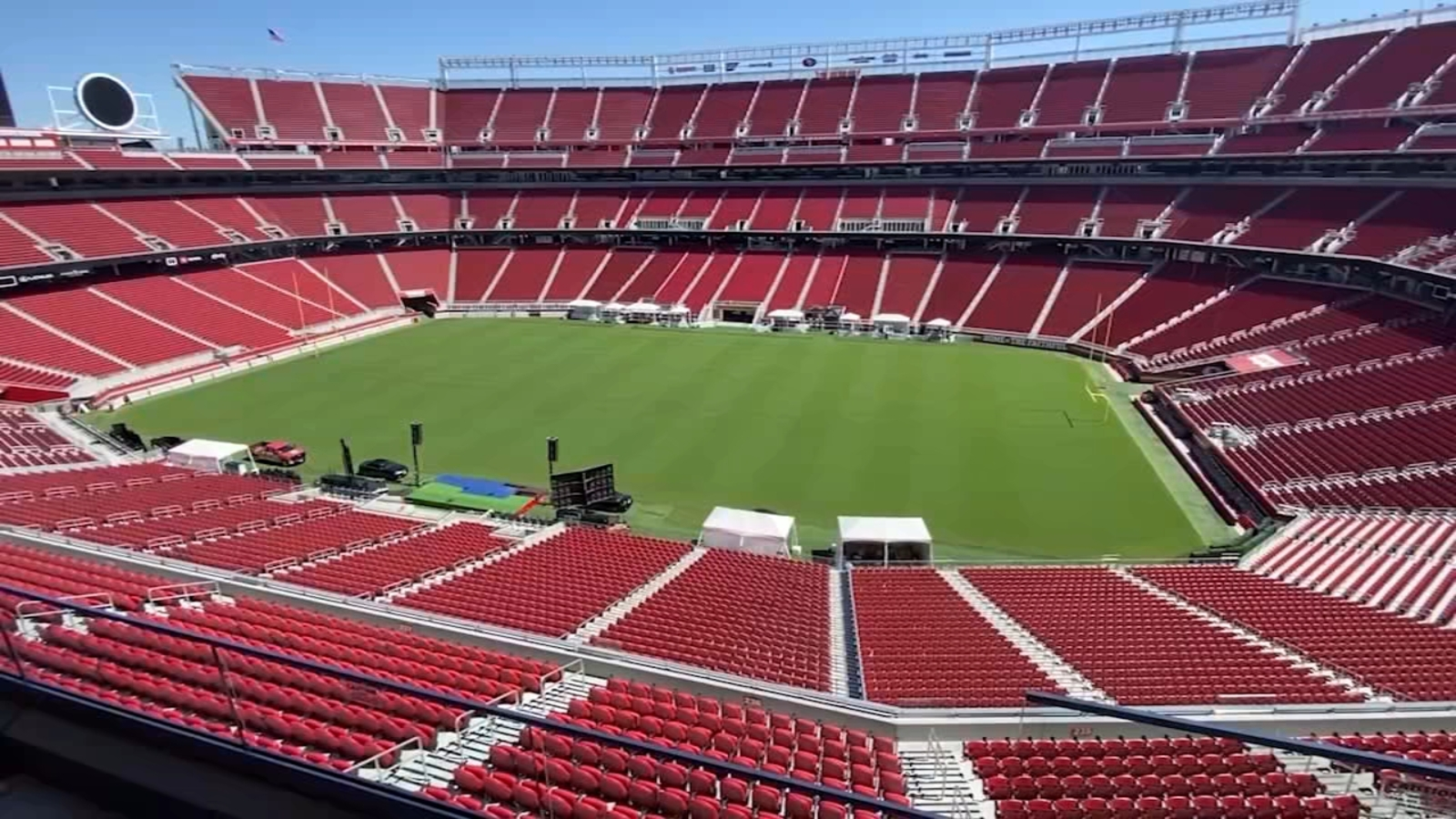
Levi’s Stadium will be the San Francisco Bay Area’s home for the FIFA World Cup 2026, hosting six matches in Santa Clara, California, including a Round of 32 knockout fixture.
During the tournament, the venue will be called San Francisco Bay Area Stadium because FIFA uses neutral venue names and removes corporate branding from World Cup stadiums. But to American sports fans, this is Levi’s Stadium: the home of the San Francisco 49ers and one of the most important modern venues in Silicon Valley.
Opened in 2014, Levi’s Stadium is one of the newer American stadiums in the tournament. It sits about 40 miles south of San Francisco, close to major technology companies, airports, highways, light rail and the wider South Bay.
For World Cup 2026, Levi’s Stadium brings a mix of strengths and challenges. It already has a natural Bermuda grass surface, which is useful for FIFA football, but the pitch has also faced turf-quality questions over the years. Tournament grounds teams will need to prepare it carefully.
The venue’s six-match schedule gives the Bay Area a meaningful role in the tournament, especially with a Round of 32 match that will move one team deeper into the knockout stage.
Quick Facts About Levi’s Stadium
| Fact | Detail |
|---|---|
| Stadium name | Levi’s Stadium |
| FIFA World Cup name | San Francisco Bay Area Stadium |
| Location | Santa Clara, California, USA |
| Address | 4900 Marie P DeBartolo Way, Santa Clara, CA 95054 |
| Capacity | 68,500 |
| Opened | 2014 |
| Roof | Open-air |
| Surface | Natural Bermuda grass |
| Main tenant | San Francisco 49ers |
| Competition focus | FIFA World Cup 2026 |
| World Cup matches | 6 matches |
| Biggest match | Round of 32 |
| First World Cup match | June 13, 2026 |
| Known for | Silicon Valley location, sustainability, suite tower, natural grass and 49ers football |
Where Is Levi’s Stadium?
Levi’s Stadium is located in Santa Clara, California, in the heart of Silicon Valley. Its address is 4900 Marie P DeBartolo Way, close to California’s Great America theme park, the Santa Clara Convention Center and major South Bay technology corridors.
Although it is home to the San Francisco 49ers, the stadium is not in San Francisco. It sits about 40 miles south of the city, which can mean a long trip for fans staying in downtown San Francisco.
The location works well for visitors based in San Jose, Santa Clara, Sunnyvale, Mountain View, Palo Alto or other Silicon Valley areas. It also gives fans access to three major airports: San Jose International Airport, San Francisco International Airport and Oakland International Airport.
For World Cup visitors, the key point is simple: plan the route early. The Bay Area is large, traffic can be heavy and public transport often requires transfers.
History of Levi’s Stadium
Levi’s Stadium was built after years of failed efforts to replace Candlestick Park in San Francisco.
The 49ers had played at Candlestick Park since 1971. The stadium had history, but it was cold, windy, outdated and increasingly unsuitable for a modern NFL franchise. The team explored several replacement options in San Francisco, including downtown and waterfront sites, but no workable deal emerged.
In 2006, the 49ers shifted focus to Santa Clara. The city offered available land, a more cooperative local government and a financing path that eventually won voter approval.
Construction began in April 2012, and the stadium opened in July 2014. Its first event was a soccer match between the San Jose Earthquakes and Seattle Sounders, a fitting start for a venue that will host the FIFA World Cup 12 years later.
The move remains controversial for some long-time fans because the 49ers kept the San Francisco name while moving deep into the South Bay. Commercially, however, the Silicon Valley location gave the franchise access to premium seating, sponsorships and corporate revenue.
Construction and Design
Levi’s Stadium was designed by HNTB Corporation, with structural engineering by Magnusson Klemencic Associates. Turner Construction and Devcon handled the project as a joint venture.
The stadium cost about $1.3 billion and was completed unusually quickly for a modern NFL venue. It opened in 2014, just over two years after groundbreaking.
One of the stadium’s defining design features is its large suite tower on the west side. Instead of spreading premium suites around the stadium, Levi’s concentrated many of them along one sideline. That created a distinctive profile and helped maximise premium revenue.
The design also created a practical challenge. The suite tower casts shadows over parts of the field, affecting sunlight exposure and grass growth. That issue has been part of the stadium’s long-running turf story.
Levi’s Stadium is open-air and has no roof. That means sun, wind and evening temperature changes are part of the match-day experience.
Levi’s Stadium and World Cup 2026
Levi’s Stadium will host six matches during the FIFA World Cup 2026.
The schedule includes five group-stage matches and one Round of 32 knockout fixture. The first Bay Area match is scheduled for June 13, 2026, when Qatar faces Switzerland.
The venue will be temporarily called San Francisco Bay Area Stadium during the tournament. That name will appear in broadcasts, ticketing, signage and official tournament material.
The Bay Area’s World Cup role is significant because the region has a deep soccer history. The San Jose Earthquakes have played in Major League Soccer since the league’s early years, and local communities from Latin America, Europe, Asia, Africa and the Middle East bring strong international football followings.
Levi’s Stadium may not host a quarterfinal or semifinal, but its Round of 32 assignment gives it knockout-stage importance.
World Cup 2026 Matches at Levi’s Stadium
| Date | Match |
| June 13, 2026 | Qatar vs Switzerland |
| June 16, 2026 | Austria vs Jordan |
| June 19, 2026 | Türkiye vs Paraguay |
| June 22, 2026 | Jordan vs Algeria |
| June 25, 2026 | Paraguay vs Australia |
| July 1, 2026 | Round of 32 |
This schedule gives San Francisco Bay Area Stadium a broad international mix. Teams from Europe, Asia, South America, Africa and Oceania are all represented in the group-stage lineup.
For African fans, the key match is Jordan vs Algeria on June 22. Algeria’s presence gives the Bay Area direct African relevance and will attract attention across North Africa and the wider continent.
The July 1 Round of 32 match will be the biggest fixture at the venue. By then, the tournament will have entered elimination football, where one result can end a country’s World Cup.
Why Levi’s Stadium Was Chosen for a Round of 32 Match
Levi’s Stadium was chosen for a Round of 32 match because it offers a modern venue, strong broadcast infrastructure, natural grass and access to the Bay Area’s global market.
The stadium has already hosted major international events, including Super Bowl 50, Copa America Centenario matches, CONCACAF Gold Cup fixtures, major concerts and college football’s national championship.
It is also located in one of the world’s most recognisable technology regions. The Bay Area gives FIFA access to a wealthy, international and media-heavy market.
The Round of 32 is the first knockout stage in the expanded 48-team World Cup format. Hosting one of those fixtures gives Levi’s Stadium a meaningful role in deciding the tournament’s next phase.
For the Bay Area, the match is also an opportunity to show that Santa Clara can handle one of global sport’s largest events.
Natural Grass and Pitch Concerns
Levi’s Stadium already uses natural Bermuda grass, which gives it an advantage over several NFL venues that normally use synthetic turf.
However, the stadium’s grass has not always been trouble-free. Since opening, players and observers have raised concerns about loose footing, uneven coverage and inconsistent turf quality.
Part of the issue comes from the stadium design. The large suite tower creates uneven sun exposure across the pitch, while the Bay Area’s climate can slow grass recovery in some conditions.
For World Cup 2026, FIFA grounds teams will need to prepare the surface carefully. The pitch must meet elite international standards for ball movement, drainage, firmness and player safety.
If the surface performs well, Levi’s Stadium could provide excellent playing conditions. If it struggles, the pitch could become a talking point.
Santa Clara Weather and Match Conditions
Santa Clara usually offers good summer weather for football.
June and July are generally warm and dry, with less humidity than many East Coast and Southern U.S. host cities. That should help players maintain a strong tempo.
The open stadium bowl means afternoon matches can bring direct sun exposure. Fans should prepare with sunscreen, hats, water and light clothing.
Evening matches can feel different. The temperature may drop as Pacific air moves inland, so fans should bring a light layer even if the day starts warm.
For players, Santa Clara’s climate should be more comfortable than hotter venues in Texas, Florida or the Southeast. But the open-air design still makes weather and sun exposure important.
Sustainability and Green Design
Levi’s Stadium is one of the most sustainability-focused stadiums in American professional sport.
It was the first professional football stadium in the United States to earn LEED Gold certification. Its green features include a large planted roof, solar panels, recycled water use and environmentally conscious construction materials.
The green roof sits above the suite tower and uses native California vegetation. Solar panels across the stadium site help generate clean energy, while recycled water reduces the need for potable water in landscaping.
These features were built into the stadium from the start rather than added later as cosmetic upgrades.
For a World Cup venue, sustainability matters. Major tournaments bring large crowds, transport demand, energy use and waste. Levi’s Stadium’s environmental systems give the Bay Area a stronger platform for managing that impact.
Major Events Hosted at Levi’s Stadium
Levi’s Stadium has hosted several major events since opening in 2014.
Super Bowl 50 was the venue’s first major global showcase, with the Denver Broncos beating the Carolina Panthers in Peyton Manning’s final NFL game. The halftime show featured Coldplay, Beyoncé and Bruno Mars.
The stadium has also hosted WrestleMania 31, the College Football Playoff National Championship, Copa America Centenario matches, CONCACAF Gold Cup games and major concerts.
In soccer, the venue’s first event was San Jose Earthquakes vs Seattle Sounders, and it has continued to host major football matches since.
That event history gives Levi’s Stadium valuable experience ahead of World Cup 2026.
Transport and Fan Access
Transport to Levi’s Stadium is workable, but fans should not treat it like a simple downtown stadium.
The venue is in Santa Clara, and most Bay Area visitors will need to use a combination of rail, light rail, shuttle, rideshare or car. VTA light rail serves the stadium area, while Caltrain connects San Francisco and the Peninsula to the South Bay.
Fans coming from the East Bay can use BART to Milpitas and connect with VTA. Those coming from San Francisco can take Caltrain south and then transfer to local service or event shuttles.
For World Cup matches, Bay Area transit agencies are expected to push fans toward public transport because traffic and parking demand will be heavy.
The best plan is to choose accommodation based on your match route, not just on the map distance.
Driving and Parking
Levi’s Stadium is close to US-101 and I-880, making it accessible by road from San Francisco, San Jose, the Peninsula and the East Bay.
However, Bay Area traffic can be difficult. The US-101 corridor between San Francisco and Silicon Valley is one of the region’s busiest routes. A trip that looks short on a map can take much longer during commute or event traffic.
Parking is available around the stadium, including Great America lots, convention centre parking and satellite lots. For World Cup matches, parking should be pre-booked where possible.
Tailgating is part of the 49ers experience, but FIFA tournament rules may differ from NFL rules. Fans should check official guidance before planning food, drinks or large pre-match setups.
Rideshare and Airport Access
Uber and Lyft will be useful for fans staying in areas not well served by rail.
Rides from downtown San Jose are usually shorter and cheaper than rides from San Francisco. After major matches, wait times and surge prices can increase sharply.
Fans flying in have three airport options. San Jose International Airport is the closest and most convenient. San Francisco International Airport is the main global hub but is farther away. Oakland International Airport can also work, especially for domestic travellers.
Because Levi’s Stadium is in the South Bay, airport choice matters. Fans attending only a match in Santa Clara may find San Jose the easiest option.
Nearby Attractions
Levi’s Stadium sits near several Silicon Valley attractions.
California’s Great America theme park is next door and may interest families visiting for the World Cup. The Apple Park Visitor Center is a short drive away and gives visitors a view into one of the world’s most famous technology companies.
The Intel Museum is also nearby and offers a look at the history of semiconductors and Silicon Valley’s rise. Santana Row provides shopping, restaurants and a more polished leisure experience.
Fans with more time can visit San Francisco, including the Golden Gate Bridge, Fisherman’s Wharf, Chinatown, Oracle Park and the waterfront.
For a full Bay Area trip, Santa Clara works best as a match base, while San Francisco and the Peninsula add the tourism appeal.
What Fans Should Know Before Visiting
Fans attending World Cup matches at Levi’s Stadium should prepare for sun, traffic and travel planning.
The stadium is open-air, so afternoon matches may feel hot in direct sunlight. Sunscreen, water and comfortable clothing will be important.
Transport should be planned in detail. Public transit is available, but many routes require transfers. Driving is possible, but parking and traffic can be stressful.
Fans should check official event guidance on bags, tickets, gate opening times and stadium rules before match day.
Because the Bay Area is spread out, staying close to a transit line may be more useful than staying close in straight-line distance.
Why Levi’s Stadium Matters to African Fans
Levi’s Stadium will matter to African fans because Algeria plays Jordan there on June 22.
Algeria brings one of Africa’s strongest football traditions, with a passionate fan base and a history of memorable World Cup performances. That match will draw attention across North Africa and the wider continent.
For Kenyan readers, San Francisco Bay Area Stadium is worth following because it gives Africa direct representation in the Bay Area’s World Cup schedule.
The Round of 32 fixture could also become important if an African team advances into the knockout stage and lands in Santa Clara.
Why Levi’s Stadium Is Important
Levi’s Stadium is important because it gives the World Cup a modern Silicon Valley venue with natural grass, strong technology infrastructure and a global regional identity.
It may not have the urban romance of a downtown stadium or the acoustic reputation of Arrowhead or Lumen Field, but it has its own strengths. It is modern, corporate, connected and built for high-end event production.
The stadium also tells a story about American sport in the 21st century: teams moving toward corporate markets, premium seating, sustainability branding and major-event versatility.
For World Cup 2026, Levi’s Stadium will represent the Bay Area on the global football stage.
Key Takeaways
- Levi’s Stadium is located in Santa Clara, California.
- It will be called San Francisco Bay Area Stadium during FIFA World Cup 2026.
- The stadium opened in 2014.
- It has a listed capacity of 68,500.
- It is home to the San Francisco 49ers.
- The venue is open-air.
- Levi’s Stadium uses natural Bermuda grass.
- It will host six World Cup 2026 matches.
- The first match is scheduled for June 13, 2026.
- The stadium will host a Round of 32 match on July 1, 2026.
- Algeria’s match against Jordan gives the venue African relevance.
- Fans should plan transport carefully because Bay Area travel can be slow and transfer-heavy.
Frequently Asked Questions
Where is Levi’s Stadium located?
Levi’s Stadium is located at 4900 Marie P DeBartolo Way in Santa Clara, California, about 40 miles south of San Francisco.
What will Levi’s Stadium be called during World Cup 2026?
During the tournament, Levi’s Stadium will be called San Francisco Bay Area Stadium because FIFA uses neutral venue names.
What is Levi’s Stadium’s capacity?
Levi’s Stadium has a listed capacity of 68,500 for standard stadium configuration.
When did Levi’s Stadium open?
Levi’s Stadium opened in 2014.
Which team plays at Levi’s Stadium?
Levi’s Stadium is home to the San Francisco 49ers of the NFL.
Does Levi’s Stadium have a roof?
No. Levi’s Stadium is an open-air venue.
Does Levi’s Stadium use natural grass?
Yes. Levi’s Stadium uses natural Bermuda grass.
How many World Cup 2026 matches will Levi’s Stadium host?
Levi’s Stadium will host six matches during the FIFA World Cup 2026.
Will Levi’s Stadium host a World Cup knockout match?
Yes. Levi’s Stadium will host a Round of 32 match on July 1, 2026.
Is Levi’s Stadium easy to reach by public transport?
It is reachable by public transport, but many routes require transfers. Fans can use VTA light rail, Caltrain, BART connections and event shuttles depending on where they are staying.
Conclusion
Levi’s Stadium will bring the FIFA World Cup 2026 to Santa Clara and the wider San Francisco Bay Area. With six matches, a natural grass surface and a Round of 32 fixture, it will play a meaningful role in the tournament.
The venue’s strengths are clear: modern infrastructure, Silicon Valley location, sustainability features, natural grass and strong event experience. Its challenges are also clear: traffic, transit transfers, direct sun and the need to ensure the pitch reaches World Cup standard.
For fans, planning will matter. Those who choose the right airport, stay near useful transit and prepare for open-air conditions should find Levi’s Stadium a strong World Cup destination.
On July 1, 2026, San Francisco Bay Area Stadium will host knockout football. That match will decide who moves deeper into the tournament and who leaves the Bay Area with their World Cup dream finished.
Read Also: Estadio Azteca World Cup 2026 Guide: Capacity, Location, Matches and Opening Match Venue
